Product Description
Workshop Steel Structure are highly efficient industrial spaces built on durable steel frames and lightweight wall panels. They are celebrated for their rapid assembly, cost savings, and vast open layouts that maximize flexibility for manufacturing and logistics. Engineered to safely withstand earthquakes and extreme winds, these buildings offer long-term reliability. Additionally, their complete recyclability ensures they remain a sustainable and forward-thinking option for today's industrial sector.
Product Specifications
| Workshop Steel Structure | |
| Item | Specification |
| Steel column | Q235,355B welded H section steel/hot-rolled H steel |
| Steel beam | Q235,355B welded H section steel/hot-rolled H section steel |
| Steel purlin | C/Z section purlin |
| Tie bar | Q235B steel round tube |
| Roof and column bracing | Q235B steel round bar, angle steel |
| Downpipe | UPVC |
| Gutter | Stainless steel gutter/0.5mm steel sheet gutter |
| Roof material | Corrugated steel sheet/sandwich panel |
| Wall material | Corrugated steel sheet/sandwich panel |
| Door | Rolling door |
| Window | Aluminium window |
Drawing Design
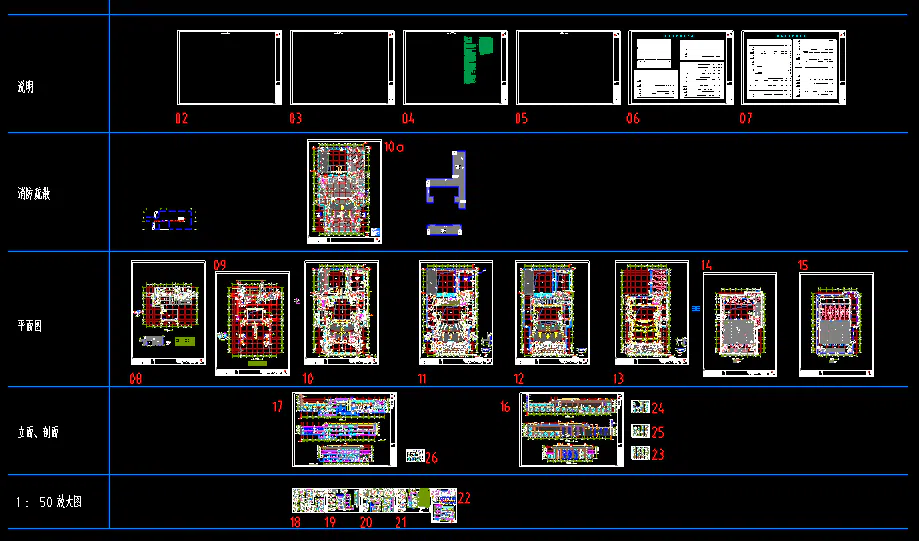
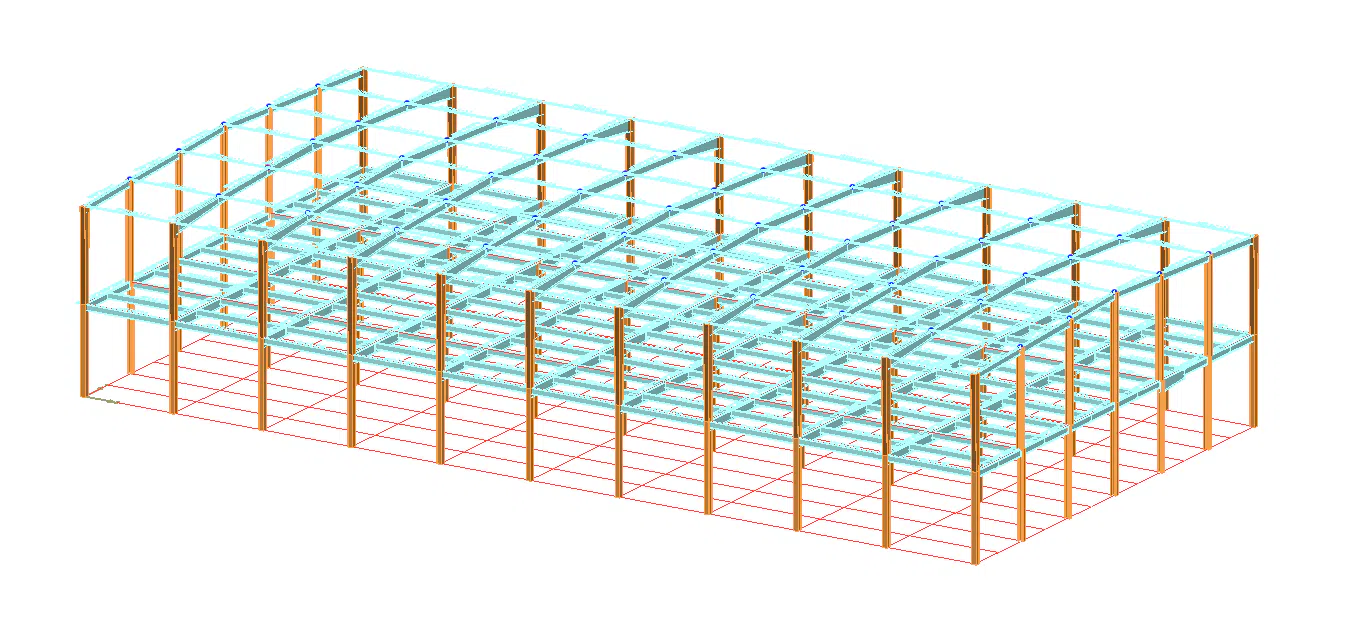
By utilizing industry-leading software like AutoCAD, PKPM, 3D3S, and TEKLA, we deliver personalized structural optimizations tailored to unique terrain and load demands. Our factory handles the entire prefabrication process, including precise cutting, punching, drilling, welding, and surface treatment. This high degree of off-site manufacturing means that on-site work is restricted to basic bolt assembly. Consequently, this approach drastically shortens construction schedules and lowers overall labor and material costs.
CAD
PKPM
TEKLA

Company Advantages
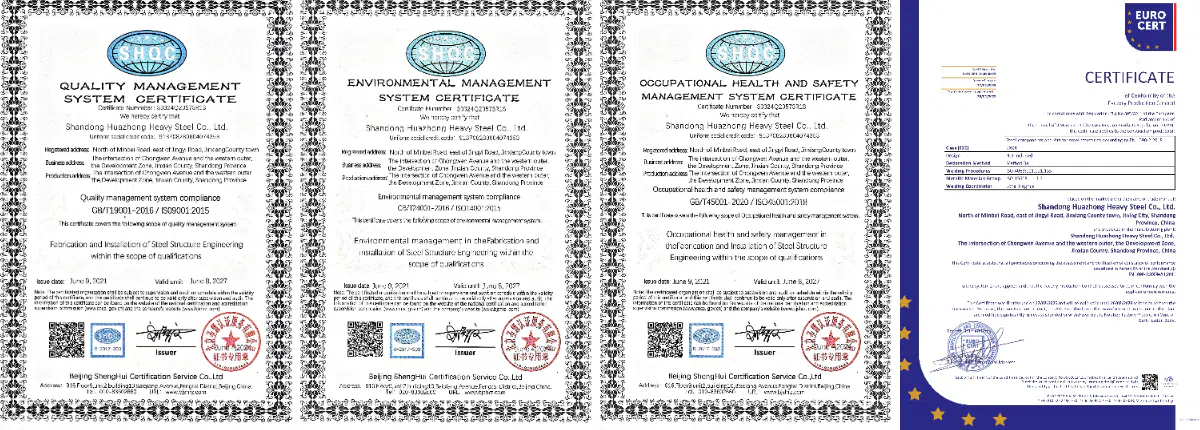
We are a CE (EN1090) and ISO 9001 certified manufacturer with over 13 years of proven experience in the steel structure sector. Our track record includes the successful completion of countless single-story workshop projects for worldwide industrial clients and Belt and Road cooperative businesses. We ensure the enduring performance of your facility through our all-inclusive service model, which integrates personalized design, off-site prefabrication, expert installation direction, and reliable long-term after-sales care.
Our Factory
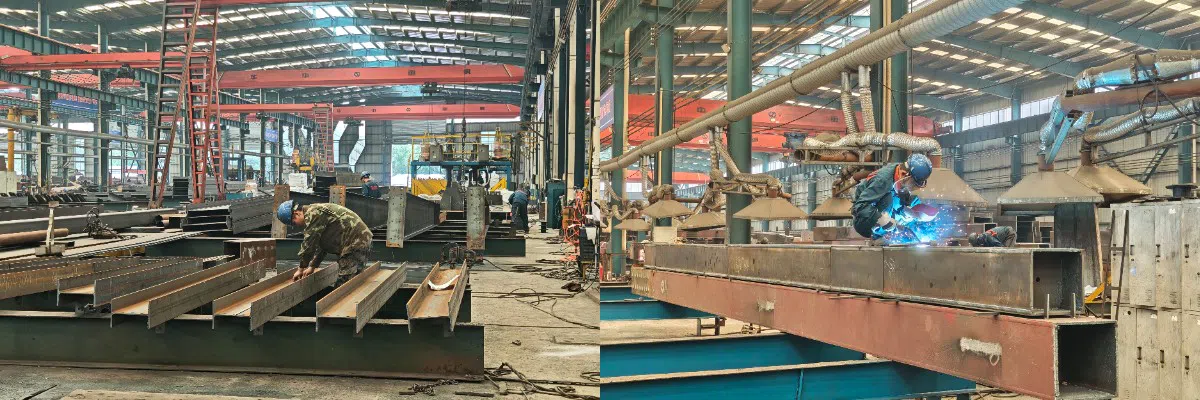
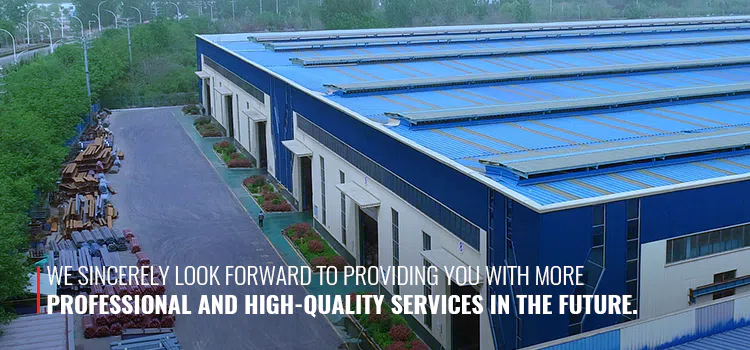
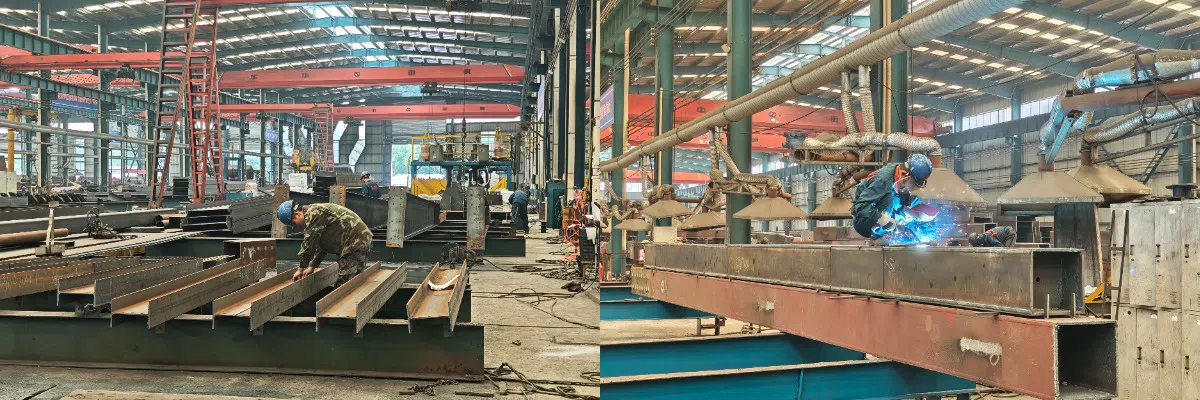
Backed by a highly proficient technical team, we ensure that every steel component is crafted with high precision and dependable quality. Our large-scale factory is powered by a complete set of modern, automated production lines, covering precision cutting, automatic welding, CNC drilling, shot blasting, and anti-corrosion coating. Through standardized management practices and rigorous quality inspections, we enforce full-process control, verifying excellence from the moment raw materials arrive until the final product is delivered.
Global Projects
Backed by 13 years of growth, our factory has completed thousands of steel structure projects for industrial parks, manufacturing bases, and processing plants. We maintain strong, stable partnerships in the global market. By strictly following international building standards, all our projects have won unanimous acclaim from overseas clients.

Packaging & Shipping
1. Readiness Phase
Prepare all shipping documentation, including layout diagrams, packing/delivery lists, and marks. Inspect the steel parts for clear identification stamps, legible spray codes, attached labels, and undamaged coatings. Select steel packaging frames that correctly fit the dimensions of the components.
2. Packaging Protocols
Prevent physical damage by inserting wooden partitions between components. Use corner protectors to safeguard joints and edges, and wrap sensitive parts in polyethylene or heat-shrink wrap. Ensure all components have prominent labels indicating their weight and ID numbers.
3. Loading & Transport
Handle materials with nylon slings or covered lifting rings. Avoid deformation by distributing the load evenly; long beams require supports spaced at 4-meter intervals. Secure the load with tight strapping, adding protective guards where straps touch the steel. Confirm that the cargo height and total weight meet legal traffic limits.

FAQ
Q1: Is a steel structure workshop more expensive than a traditional concrete building?
A: Generally, steel workshops offer better overall cost efficiency. While the steel material itself has a cost, the reduced foundation requirements, faster construction time (saving labor costs), and lower maintenance needs often make it more economical in the long run.
Q2: What types of steel materials do you use for the main frames?
A: We primarily use high-quality Q235B or Q345B structural steel, which offers an excellent strength-to-weight ratio. All materials are sourced from certified suppliers and undergo strict quality inspections before fabrication.
Q3: How does the lightweight nature of steel affect the foundation costs?
A: Because steel is much lighter than concrete, the dead load on the foundation is significantly reduced. This allows for smaller, simpler, and less expensive foundation designs, saving you both time and money during the initial construction phase.